
Product Library
·
Last updated 2026-05-20
Blueberries
Every piece of advice below comes from official tests, consumer test reports, or publicly available data from international food-safety bodies. Click the links to check the original sources.
How to tell if this affects your family
- Pesticide residues are invisible to the naked eye, so parents can't judge whether blueberries are safe just by looking at them.[1][2]
- Research shows that blueberries are among the fruits more likely to test positive for pesticide residues — something parents should keep in mind.[3]
- If the blueberries come from a country with looser pesticide regulations or higher residue limits for certain chemicals, it's worth paying extra attention.[4][5]
What you can do today
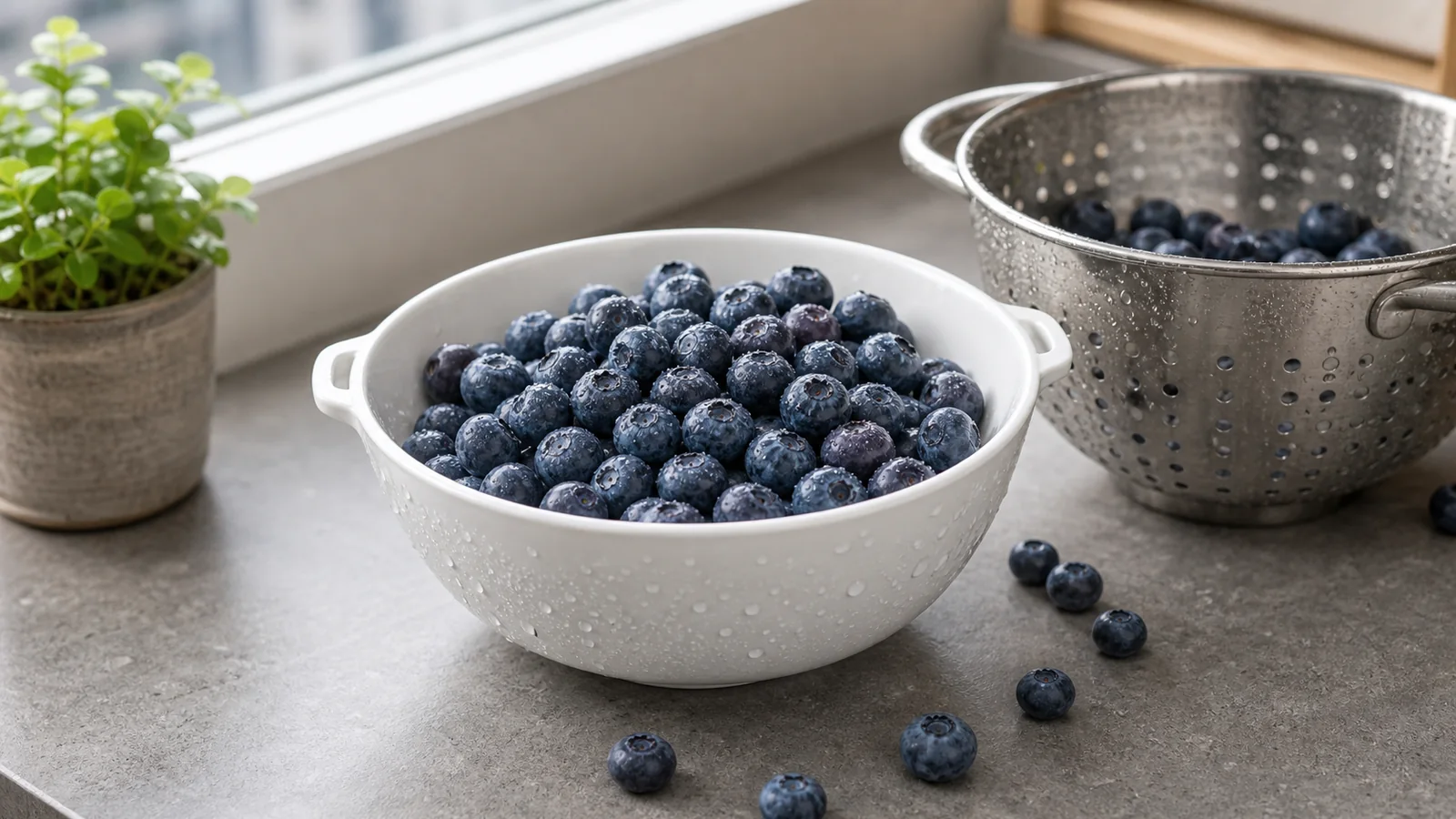
- Before eating blueberries, rinse them gently under running water. This can wash away some of the surface pesticide residues.[1][6]
- No need for detergent when washing — it can actually cause the berries to absorb other chemicals, which is counterproductive.[6]
- Soaking is also an option, but keep it to about 10–15 minutes, then rinse with clean water.[7][6]
What to look for next time you shop
- Look for certified organic blueberries — the chance of pesticide residues is significantly lower.[8]
- Pay attention to the country of origin. Choose blueberries from places with strict pesticide standards.[9][4]
- If possible, buy directly from a reputable farm or supplier and find out how they grow their berries.[8]
Reference standards
- USDA Organic certification — Requires that 95% or more of ingredients are organically grown. Synthetic pesticides, chemical fertilisers, GMOs, and hormones are prohibited. Official source
- EU Organic certification — The EU organic logo (green leaf) applies similar standards to USDA Organic, covering fruit, vegetables, meat, and dairy. Official source
Sources
Every piece of advice above corresponds to one or more of the sources below. Any parent can click through to check the original.
- [1] Centre for Food Safety Food Alerts · cfs.gov.hk/english/consumer_zone/foodsafety_contaminants_pesticide.html
- [2] Consumer Reports (consumerreports.org) · consumerreports.org/health/food-contaminants/stop-eating-pesticides-a1094738355/
- [3] Consumer Reports (consumerreports.org) · consumerreports.org/health/food-contaminants/fruits-and-vegetables-loaded-with-pesticides-a2508510840/
- [4] EU Safety Gate · food.ec.europa.eu/plants/pesticides/maximum-residue-levels_en
- [5] Taiwan Food and Drug Administration · consumer.fda.gov.tw/Law/PesticideList.aspx
- [6] Consumer Reports (consumerreports.org) · consumerreports.org/health/food-contaminants/how-to-protect-yourself-from-pesticides-in-produce-a4482576266/
- [7] Macau Consumer Council · consumer.gov.mo/News/Data/PDF/CH/2022/7/07202220164226_%E6%B1%9F%E8%98%87%E7%9C%81%E6%B6%88%E4%BF%9D%E5%A7%94_%E6%9E%9C%E8%94%AC%E6%B8%85%E6%B4%97%E6%A9%9F%E5%88%B0%E5%BA%95%E7%AE%A1%E4%B8%8D%E7%AE%A1%E7%94%A8%EF%BC%9F.pdf
- [8] Consumer Reports (consumerreports.org) · consumerreports.org/health/food-contaminants/produce-without-pesticides-a5260230325/
- [9] Centre for Food Safety Food Alerts · cfs.gov.hk/english/whatsnew/whatsnew_fstr/files/Pesticide_Residues_in_Food_Guidelines_e.pdf
Want to see the full test results?
This month's feature article breaks down the complete brand list from the Consumer Council's 2020 test of 77 crunchy snacks.