Product Library
·
Last updated 2026-05-20
Sunscreen
Every piece of advice below comes from official tests, consumer test reports, or publicly available data from international food-safety bodies. Click the links to check the original sources.
How to tell if this affects your family
- Is your spray sunscreen a Neutrogena, Aveeno, Banana Boat, or Coppertone product? Certain batches of these brands were recalled in the US after trace amounts of benzene were detected.[1][2][3]
- Check the ingredient list for octinoxate or homosalate — the Consumer Council has flagged these chemical filters as potential endocrine disruptors.[4]
- Don't take the SPF number on the label at face value — the Consumer Council's tests found that over 80% of products failed to meet their stated SPF claim.[4][5]
What you can do today
- Apply sunscreen 15–30 minutes before going out, and use enough of it — covering the whole body takes roughly a ping-pong ball's worth.[6]
- Reapply after swimming, sweating, or every two hours — that's what it takes to keep up sun protection.[6]
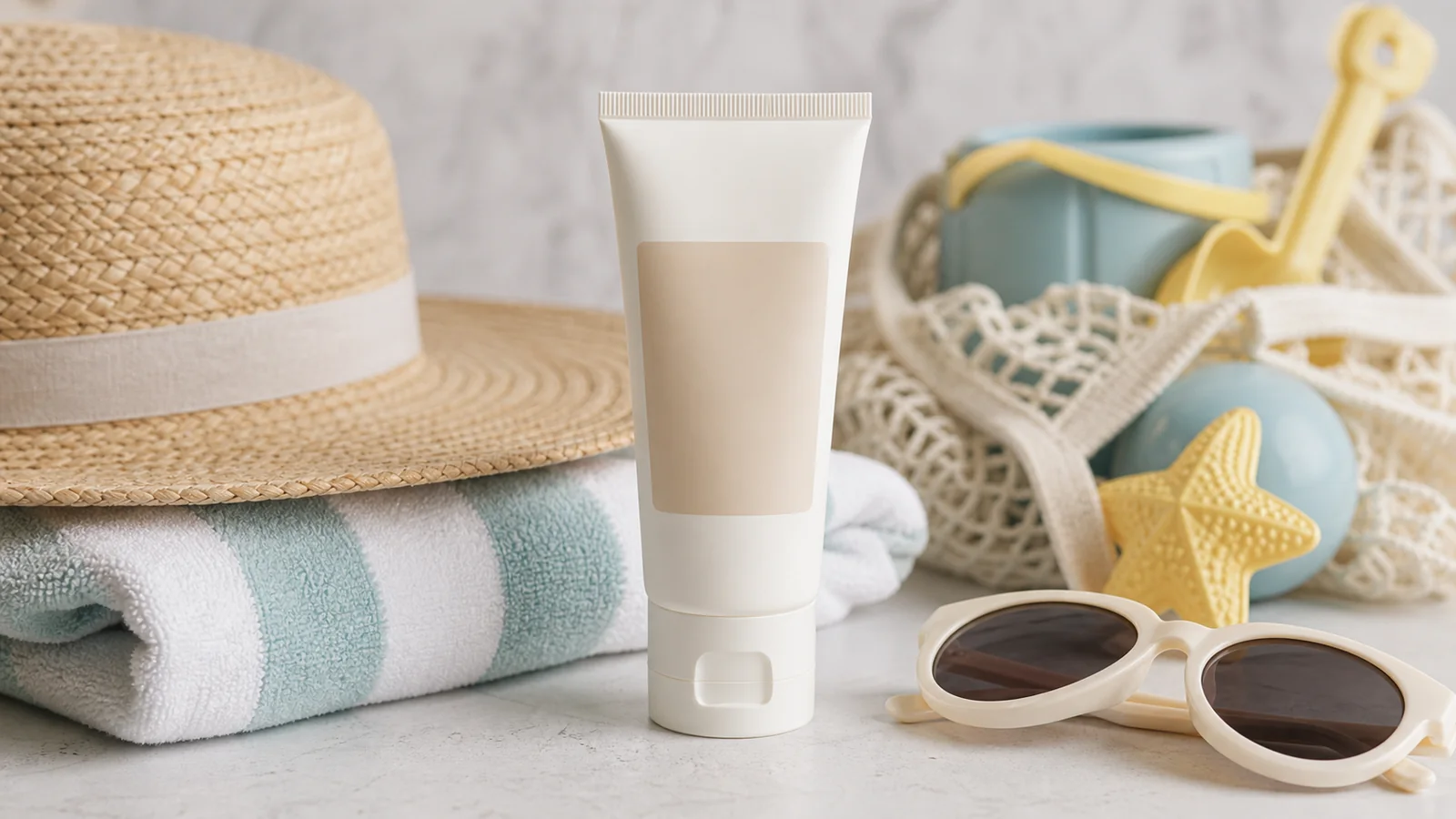
- Don't rely on sunscreen alone. Put a wide-brimmed hat, sunglasses, and long-sleeved clothes on your child — physical barriers are more reliable.[6]
- If your child has sensitive skin, do a patch test on the inner arm for a day or two before using a new product to check for any reaction.[6]
What to look for next time you shop
- Prioritise "mineral" or "physical" sunscreens whose active ingredients are zinc oxide or titanium dioxide — these tend to be gentler on skin.[6]
- Choose lotion or cream formats over sprays. This avoids inhalation and the benzene contamination risk associated with some spray products.[7][2]
- Look for products labelled "Broad Spectrum" or that display both an SPF and a PA rating — that way you get protection against both UVB and UVA.[6]
Brands that passed testing
Products or brands verified by a trusted source. This does not mean every batch is guaranteed safe — always check the latest packaging information when buying.
- Allie — No allergens, potential endocrine disruptors, or parabens detected in Consumer Council testing.[4]
- Curél — No allergens, potential endocrine disruptors, or parabens detected in Consumer Council testing, and strong UVA protection.[4]
- NIVEA — Measured SPF met the stated label claim (SPF 30–50 category) in Consumer Council testing.[4]
- Cancer Council AU — Measured SPF met the stated label claim (SPF 30–50 category) in Consumer Council testing.[4]
- Seba Med — Measured SPF met the stated label claim (SPF 30–50 category) in Consumer Council testing.[4]
Sources
Every piece of advice above corresponds to one or more of the sources below. Any parent can click through to check the original.
- [1] U.S. FDA Recalls, Market Withdrawals, and Safety Alerts · fda.gov/safety/recalls-market-withdrawals-safety-alerts/coppertoner-issues-voluntary-nationwide-recall-specific-lots-pure-simple-spf-50-spray-2021-launch
- [2] U.S. FDA Recalls, Market Withdrawals, and Safety Alerts · fda.gov/safety/recalls-market-withdrawals-safety-alerts/johnson-johnson-consumer-inc-issues-voluntary-recall-specific-neutrogenar-and-aveenor-aerosol
- [3] U.S. FDA Recalls, Market Withdrawals, and Safety Alerts · fda.gov/safety/recalls-market-withdrawals-safety-alerts/edgewell-personal-care-issues-voluntary-nationwide-recall-banana-boat-hair-scalp-sunscreen-due
- [4] Consumer Council · consumer.org.hk/tc/press-release/528-sunscreen-test
- [5] Which? (which.co.uk) · which.co.uk/news/article/is-there-a-problem-with-sunscreen-spf-scandal-leaves-buyers-exposed-al8qf0T9HhOb
- [6] Consumer Council · consumer.org.hk/en/shopping-guide/trivia/2020-tips-sunscreen-2
- [7] Consumer Reports (consumerreports.org) · consumerreports.org/toxic-chemicals-substances/benzene-known-carcinogen-in-spray-sunscreens-deodorants-a1136768493/
Want to see the full test results?
This month's feature article breaks down the complete brand list from the Consumer Council's 2020 test of 77 crunchy snacks.